After the Certificate: Auditing the Asbestos Waste Paper Trail in 2026
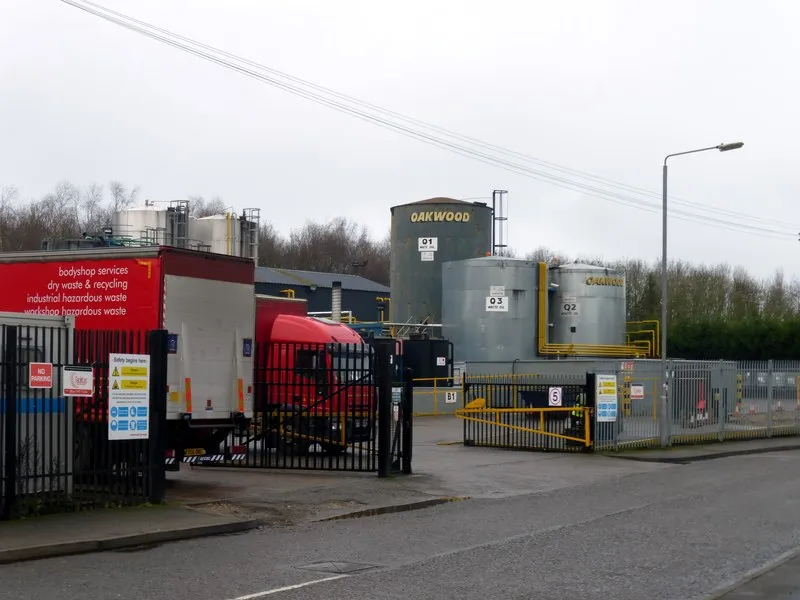
Photo: Graham Hogg , CC BY-SA 2.0, via Wikimedia Commons
Clearance certificates have a narrow purpose. They record that a defined area has been cleaned to the agreed standard after removal work; they do not, by themselves, prove that the asbestos-containing material was packed, transported and received at a permitted facility in accordance with the law. For dutyholders, the waste trail is the independent check. It tests whether the removal described in the tender, job sheet and certificate is the removal that actually generated the waste.
Why the clearance certificate is not the end of the audit
A clearance certificate is a statement about cleanliness at a point in time. It is not a waste movement record, nor is it evidence that the correct carrier collected the material or that a permitted site accepted it. The two records answer different questions. The certificate asks whether the area is fit for reoccupation; the waste trail asks what happened to the material that was taken away.
That distinction matters because dutyholders remain accountable for the waste produced on their premises. In England and Wales, hazardous waste consignment notes are required under the Hazardous Waste Regulations 2005. Scotland uses special waste consignment notes, and Northern Ireland has equivalent hazardous waste controls. Across the UK, the duty of care under section 34 of the Environmental Protection Act 1990 requires waste to be stored, transferred and disposed of safely and only to authorised persons. A removal contractor's paperwork should therefore show a coherent chain: consignor, registered carrier, permitted consignee, accurate description, quantity and dates.
The documents that make up the waste trail
A useful desk review starts with the documents the dutyholder should already hold or be able to obtain from the removal contractor. These normally include:
- hazardous or special waste consignment notes for each movement;
- the carrier's waste carrier, broker or dealer registration details;
- evidence that the consignee site is permitted to accept the relevant hazardous waste;
- transfer or movement records linked to the consignment notes;
- the clearance certificate, job sheets and removal scope; and
- invoices or waste returns that refer back to the consignment note references.
The consignment note is the central document. It should identify the consignor, carrier and consignee; describe the waste; give the quantity and relevant European Waste Catalogue code; state the date and place of transfer; and carry the required signatures. A note that is generic, incomplete or disconnected from the project records is a prompt for further enquiry, not proof of a problem in itself.
Mismatches that matter
A desk audit is not a hunt for clerical perfection. It is a test of whether the recorded waste is consistent with the removal that was commissioned and completed. The most useful checks are comparative.
Dates should sit within a credible window. Consignment notes dated before the removal started, or long after the area was certified, deserve an explanation. Quantities should broadly reconcile with the removal scope, allowing for packaging and normal variation. A certificate for a substantial asbestos insulating board removal supported by a single small consignment note is not automatically wrong, but it is a question that should be answered.
Waste descriptions should be specific enough to be meaningful. 'Asbestos waste' tells the dutyholder very little. The note should distinguish, where relevant, between asbestos insulating board, cement products, insulation or other asbestos-containing materials, and should use the appropriate waste code. For asbestos, common codes include 17 06 05* for construction materials containing asbestos and 17 06 01* for insulation materials containing asbestos. The code should not contradict the description.
The parties should also match. The carrier named on the note should be the carrier that attended site, and its registration should cover the movement of hazardous waste. The consignee should be a permitted facility able to accept that waste. Names and addresses that differ from the quotation, invoice or site records are not necessarily fatal, but they require a documented explanation.
A 2026 desk-based review in six steps
A proportionate review can be completed without visiting site. The aim is to create a short, defensible record of what was checked and what was found.
- Define the job boundary. Gather the survey or register extract, removal specification, tender return, job sheets, clearance certificate and all waste documents for the project.
- Build a timeline. Compare removal start and finish dates with consignment note dates and the clearance certificate date. Look for gaps or movements that fall outside the project period.
- Verify the parties. Check the carrier registration and the consignee permit using the relevant regulator's public register. Confirm that the names, addresses and permissions are consistent with the notes.
- Reconcile quantities. Compare estimated tonnages or volumes with the quantities recorded on consignment notes. Allow for packaging and reasonable estimation, but seek an explanation for material differences.
- Test descriptions and codes. Check that the waste description, asbestos type and waste code are consistent with the removal scope and with each other.
- Close out exceptions. Ask for written clarification, missing notes, corrected references or additional consignment notes where the trail is incomplete. Record the response and the conclusion.
Red flags and proportionate questions
Certain patterns justify a more detailed enquiry. These include consignment notes that predate the removal works; a carrier whose registration does not cover hazardous waste; a consignee permit that does not appear to accept asbestos waste; quantities that are materially lower than the removal scope suggests; repeated use of vague descriptions; and invoices that cannot be linked to a consignment note reference.
The response to a red flag should be proportionate. A minor date discrepancy may be explained by a corrected note or a later collection. A missing consignment note for a substantial removal is a more serious gap. The dutyholder does not need to resolve every anomaly personally, but it should not close the file without a documented explanation.
Recording the review
The review should be recorded alongside the asbestos management plan and the project file. A short audit note can set out the project reference, the documents reviewed, the checks completed, any exceptions identified, the actions taken and the date of sign-off. This record demonstrates that the dutyholder has tested the waste trail rather than relying solely on the clearance certificate.
The clearance certificate remains an important document, but it is not the whole story. Following the waste gives dutyholders a second, independent line of assurance: that the material removed from the building can be traced through a registered carrier to a permitted destination, with dates, quantities and descriptions that match the job.