The Register Is Not the Record: Asbestos Evidence in Higher-Risk Building Safety Cases
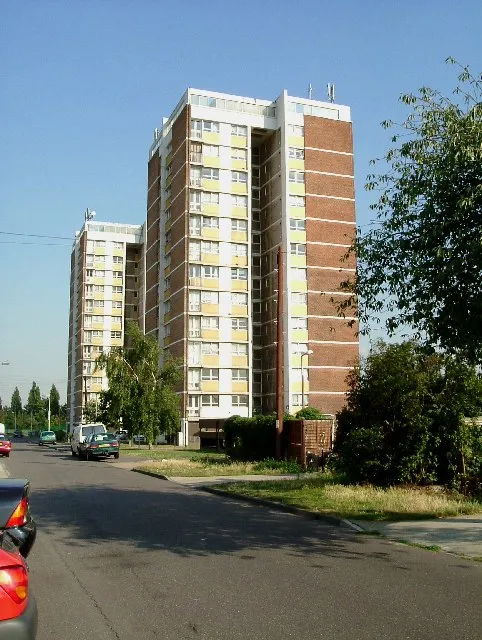
Photo: Glyn Baker, CC BY-SA 2.0, via Wikimedia Commons
The Building Safety Act 2022 changed the question accountable persons must answer. It is no longer enough to hold an asbestos register, a management plan and a file of survey reports. The evidence must be retrievable, current and connected to the safety case for the building. In too many higher-risk residential buildings, asbestos information remains a PDF appendix: present, perhaps accurate, but not woven into the golden thread.
That is the loose end. Asbestos data sits at the intersection of building fabric, fire safety, maintenance and refurbishment. If it is stored outside the building safety management system, the accountable person cannot easily demonstrate that risks are understood and controlled. The register becomes a document rather than a record.
At Ace ACM, the recurring issue is rarely a complete absence of data. It is the absence of linkage. The survey exists; the refurbishment file exists; the fire door schedule exists. What is missing is a controlled path between them.
Why a PDF appendix fails the golden thread test
The golden thread is often described as a digital record, but its real test is simpler: can the right person find the right information at the right time, and know that it is the right version? A static PDF cannot reliably answer that. It may be undated, superseded or detached from the survey it summarises. It may cover only part of the building. It may not show what changed after a plant room upgrade or a flat-front door replacement.
For asbestos, the golden thread should connect the register to the management plan, the survey reports, the permit-to-work system, contractor inductions, refurbishment records and the safety case report. Each connection does not need to be elaborate. It does need to be controlled.
Failure point one: version control and provenance
A register that cannot be traced to a named survey, a defined scope and a date is difficult to rely on. Accountable persons should be able to show which register is live, who approved it, what survey type produced it and what limitations apply. Where there are multiple blocks, levels or common parts, the register should make clear whether the data is complete or partial.
Version control is not an administrative nicety. If a contractor works from an old register, the control regime may be based on outdated assumptions. If the safety case cites a register that has since been replaced, the evidence chain is weakened. A simple document control table, backed by access permissions and a change log, is usually more valuable than a more polished but uncontrolled PDF.
Failure point two: refurbishment and project records
Higher-risk buildings are rarely static. Plant replacements, riser modifications, fire door works and flat refurbishments can all disturb or encounter asbestos-containing materials. The safety case should be able to show how asbestos risk was considered before work started and what happened when the fabric was opened.
This means linking the register to project files, pre-construction information, contractor method statements, permit records and, where relevant, asbestos waste consignment notes. It also means updating the register when the works are complete. A common failure is a well-managed project file that never feeds back into the building’s live asbestos record. The project is closed; the register is not updated; the next contractor inherits an incomplete picture.
Failure point three: fire door and compartmentation links
Asbestos data and fire safety data are often managed in separate silos. That is understandable, but it creates blind spots. Fire door frames, riser penetrations, ceiling voids and compartment walls can contain asbestos-containing materials. When fire door surveys, compartmentation inspections or remediation works take place, the asbestos register should be checked and, where necessary, updated.
The golden thread should allow a reader to move from a fire door record to the relevant asbestos information without a manual search through shared drives. This does not mean combining every dataset into one unwieldy system. It means defining the links and testing them.
Failure point four: safety case evidence and narrative
The safety case report must tell a coherent story about how safety risks are managed. Asbestos should not appear as a standalone annex with no connection to maintenance, refurbishment or fire safety. The report should explain how asbestos information is kept up to date, how contractors access it, how changes are captured and how the accountable person assures themselves that controls are working.
Assessors are likely to look for evidence, not assurance language alone. A statement that the register is reviewed annually is stronger when supported by review records, version history and examples of updates following works. A statement that contractors receive asbestos information is stronger when supported by induction records and permit-to-work extracts.
A practical pre-assessment checklist for 2026
Accountable persons preparing for Building Safety Regulator scrutiny should test the following before the safety case is finalised:
- Confirm the live asbestos register is identifiable by version, date, author, survey scope and limitations.
- Check that the register covers common parts, plant rooms, risers, service voids and other areas within the accountable person’s control.
- Trace every entry in the safety case report to a controlled source document.
- Review refurbishment and maintenance records since the last survey and confirm whether the register was updated.
- Test the link between fire door, compartmentation and penetration records and the asbestos register.
- Verify that contractor induction, permit-to-work and emergency procedures reference the current register.
- Ask a colleague who does not know the building to locate the asbestos evidence for a specific area within a set time.
- Record any data gaps, limitations or unresolved actions, and show how they are being managed.
- Confirm roles and responsibilities for register updates are documented and understood.
- Check that the management plan and safety case report use consistent terminology and building references.
Closing the loose end
The golden thread is not a separate project to be completed after the safety case. It is the evidence trail that makes the safety case credible. For asbestos, that means treating the register as a controlled record rather than a reference document. Accountable persons who can demonstrate version control, clear links to refurbishment and fire safety records, and tested retrieval arrangements will be better placed to show that asbestos risk is genuinely managed in 2026 and beyond.